



“I was born in another time. I don’t mean this metaphorically, but literally. I arrived in this world during a period geologists call the Holocene, and I will leave it —as will every one of us alive today — in the Anthropocene, the time of humans.”
With these words, David Attenborough begins the conclusion of one of his most notable books, A Life on Our Planet. These words resonate even more today, as he celebrates his 100th birthday. Yes, 100 years of life on Earth, a life dedicated to showing the planet to others, teaching about it, and promoting its protection.
Perhaps the name of David Attenborough does not resonate with some, perhaps not even when seeing him in the most current or past photographs, but there is something that almost every person recognizes: his voice. Clear, slow, precise, with an almost romantic style, full of adjectives capable of embellishing the slightest movement of a turtle or expanding what is generated by the surfacing of a whale.
With studies in geology and zoology, Attenborough stood out for bringing the natural world into homes through audiovisual productions and for doing so in a different, innovative, intelligent way. The boy, born in the London suburb of Isleworth, became recognized in his adulthood as “the voice of nature.”

In this process, Attenborough was also one of the few people who was able to record with his own eyes the changes that human activities were generating in the environment, other species, and the survival of his own.
“We have become a global force with such power that we are affecting the entire planet,” he expresses in his books and underlines: “In the end, the question of which version of the Anthropocene is about to unfold is up to us (…) The dangers that now face the Earth are global and can only be dealt with if nations sink their differences and unite to act globally.”
His 100th birthday will be the occasion for the reproduction of his more than 40 documentary series -—not counting all the others that feature his narrating voice— and he will have an exclusive event organized by the BBC at the Royal Albert Hall in London. At Huella Zero, we celebrate him by taking a tour of his work based on five outstanding lessons that his legacy leaves us.
He revolutionized the television: he changed the way nature was broadcast
The media that initially attracted Attenborough was not the television that would end up seeing him succeed. It was the radio. He made three attempts to get a job on the BBC radio station. Although they were not successful, this opened the door for him to start his career in the production of content for the image and sound box that was in the families’ living room: the TV.
He worked as a producer, was behind the network’s educational programming, became programming director and had his first big impact with the series Zoo Quest, with which Attenborough explored, for 10 years, remote habitats and showed little-known animals. He then left the permanent role at the BBC and decided to return with something different. Something that would mark a before and after in his life, and in the audiences’ ones.
Attenborough proposed the BBC to make a natural history television series that would show the evolution of life on Earth. They worked for three years and traveled to 49 countries, something that had not been done before for an environmental documentary. The result was the now historic and recognized Life on Earth.

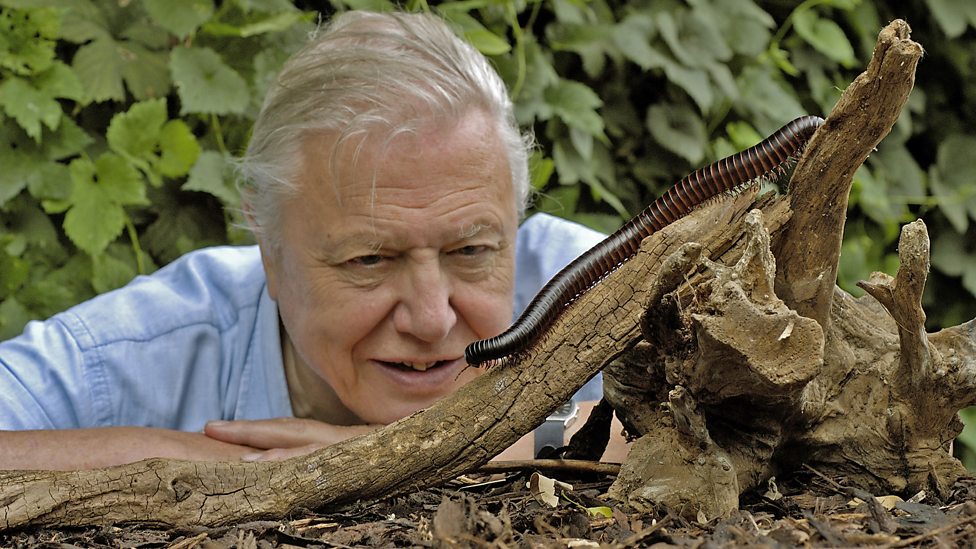
That was the beginning of a series of content that continued the same purpose. They also had to adapt to the changes that humans were making in the beautiful nature. Through audiovisual productions, Attenborough sought to bring the wonders of nature into homes to promote its protection, he also made visible its fragility in the face of human activities to urge a call for action.
He was a unique translator: he narrated the complex scientific world in a way that was understandable and attractive to audiences
The particularity of Attenborough’s work was not limited only to showing nature from nature itself but was also complemented by a particular style in its content and narrative.
In each television program, in each documentary, the British naturalist knew how to translate the complex, technical and distant scientific information of each animal, each ecosystem, each element of biodiversity into simple and understandable language. His unique voice, his eloquence to describe the smallest detail —even with humor— knew how to attract the attention of the audiences and awaken their interest.
“He understands television because he was there when it started and he invented so much of it for the BBC. Because he has this huge understanding, it means he can communicate to audiences in a way that’s looks effortless but actually requires a huge amount of knowledge and skill to deliver things the way he kind of does,” Keith Scholey, director of the documentaries Ocean and A Life on Our Planet, among others, shared in an interview with Huella Zero in 2025.
Attenborough’s co-worker for the last 40 years, Scholey points out: “We could never have made Ocean with anyone else because he is the only person the world trusts to talk about what is a difficult subject. He is the only person the world trusts, he has never told us anything that is not true. And so, you have to listen to him.”
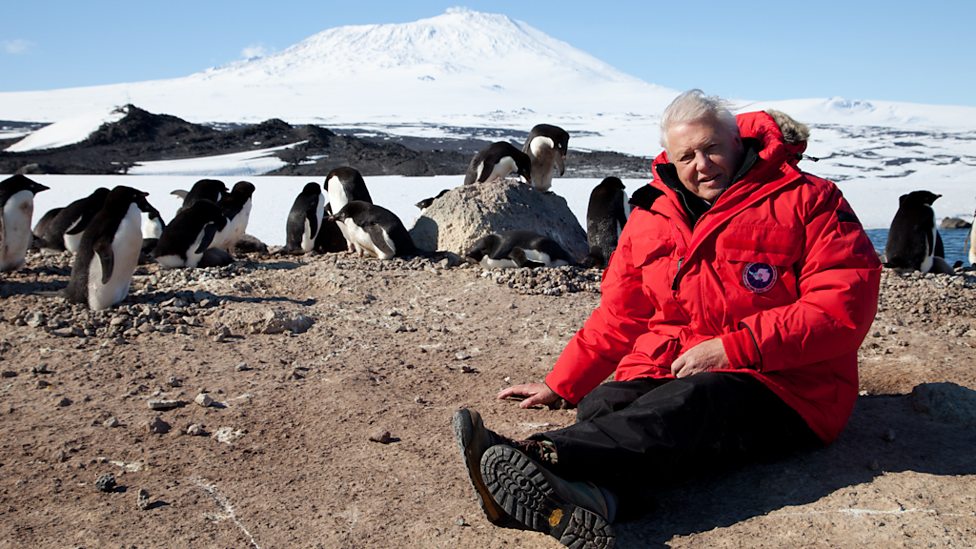
He is an eternal student: he showed the importance of staying curious and constantly learning
Filming the documentary Attenborough and the Giant Dinosaur in Argentine Patagonia, the British communicator found a piece of egg fossil from what is considered the largest dinosaur discovered.
“It’s a huge piece! Amazing,” he says and asks the scientist questions while touching the piece. “We can see all the little pores on the surface. What a beautiful piece! You have to admit, it’s quite romantic,” he tells the scientist, they laugh and, like the responsible naturalist that he is, he adds: “I must put it back where I found it.” And he leaves her back on Patagonian soil.
This is how each of their productions are. Those who have worked with him agree that this is not part of the script. On the contrary, that is Attenborough at his best: curious, passionate about learning, eager to ask questions.
Even though he is one of the people who knows the most about the natural world, Attenborough never rests in the learning process, in giving voice to specialized experts, in asking questions. That, in times of misinformation and explosion of content creators, is a valuable reminder.
“Every time I worked with him, I learned something kind of new and different. Because he is such an incredibly interesting person,” Scholey reflects, adding: “Over my whole career with David, what I really learned is that at his heart he is the best broadcaster. One of the best the world has ever known.”
He had a positive impact: from international political spaces to the London neighborhood in which he lives
Throughout his more than six decades of work, Attenborough has also traveled the world speaking at events, meeting with leaders, and being a reference in communication and raising awareness.
In 2021, he was the main participant of the United Nations Conference on Climate Change, COP26, inauguration, which took place in Glasgow, Scotland. There he gave a forceful message to the political representatives of the different countries who listened attentively in the plenary.
“If working apart, we are force powerful enough to destabilize our planet, surely, working together, we are powerful enough to save it. In my lifetime, I’ve witnessed a terrible decline. In yours, you could and should witness a wonderful recovery. That desperate hope, ladies and gentlemen, delegates, excellencies, is why the world is looking to you and why you are here,” he said.
How much of that message was heeded and acted upon in the years since carries a bitter taste. When Attenborough was 11 years old in 1937, the carbon dioxide (CO2) concentrations in the atmosphere were 280 parts per million (ppm). Today, at 100 years old, the figure rose to 429 ppm. The maximum desirable limit was 350 ppm.
That doesn’t stop Attenborough. It drives him to continue working. And to do it globally and systemic, and locally and collectively.

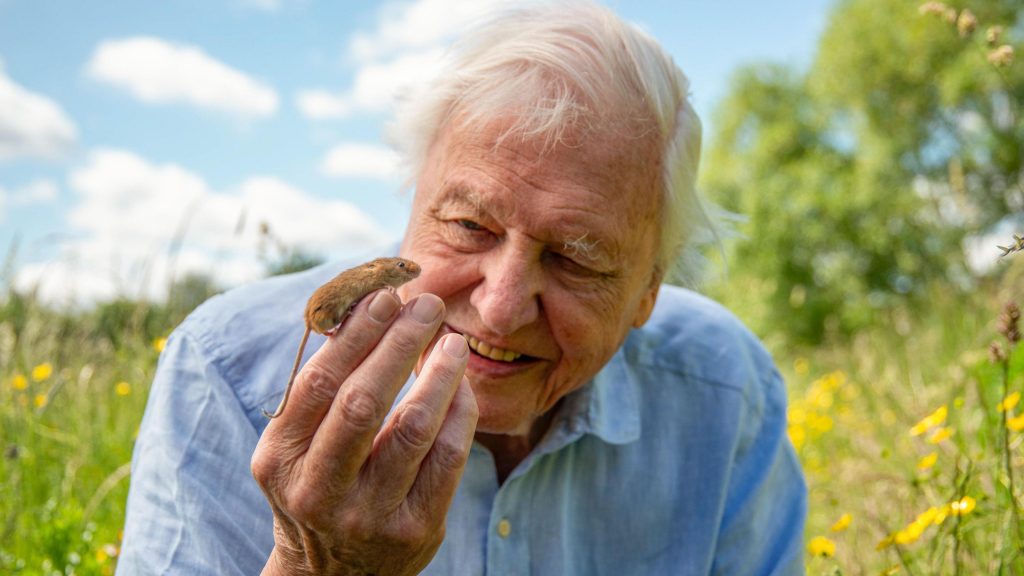
“It is a refuge and a source of inspiration,” said Attenborough about Richmond, the London neighborhood located 20-30 minutes by train from the center of the English capital, which has a park of more than a thousand hectares, a herd of 630 deer and 144 species of birds. That neighborhood is the home to which, for 70 years, Attenborough has returned, where he resides and which he enjoys.
That is the neighborhood that also seeks to take care of. Attenborough supports as a patron the work of Friends of Richmond Park, a charity dedicated to the protection and conservation of the park. In addition, he takes time to sign each of his books sold by the independent bookstore —founded in 1987— The Open Book. “I wouldn’t want to live anywhere else,” David said of Richmond.
He dedicated his life to caring for the planet: at 100 years old, he continues making documentaries to raise awareness
“Is this the last documentary we will see from David?”, we asked the directors of Oceans in May 2025 during its premiere. “Who knows? Only he can answer that. I think he’ll keep going until he can’t anymore,” Toby Nowlan, director and producer of the documentary, replied.
Since then, the following have been released: Parenthood, a documentary series about the paternal role and the bonds of different animal species in the ocean, the grasslands, freshwater, and the jungle; Kingdom, a television series about four families of leopards, hyenas, wild dogs, and lions in Zambia; Secret Garden, a television miniseries about the wildlife hidden in the parks and backyards of the United Kingdom; and Wild London, a television special exploring the biodiversity of his hometown, London.
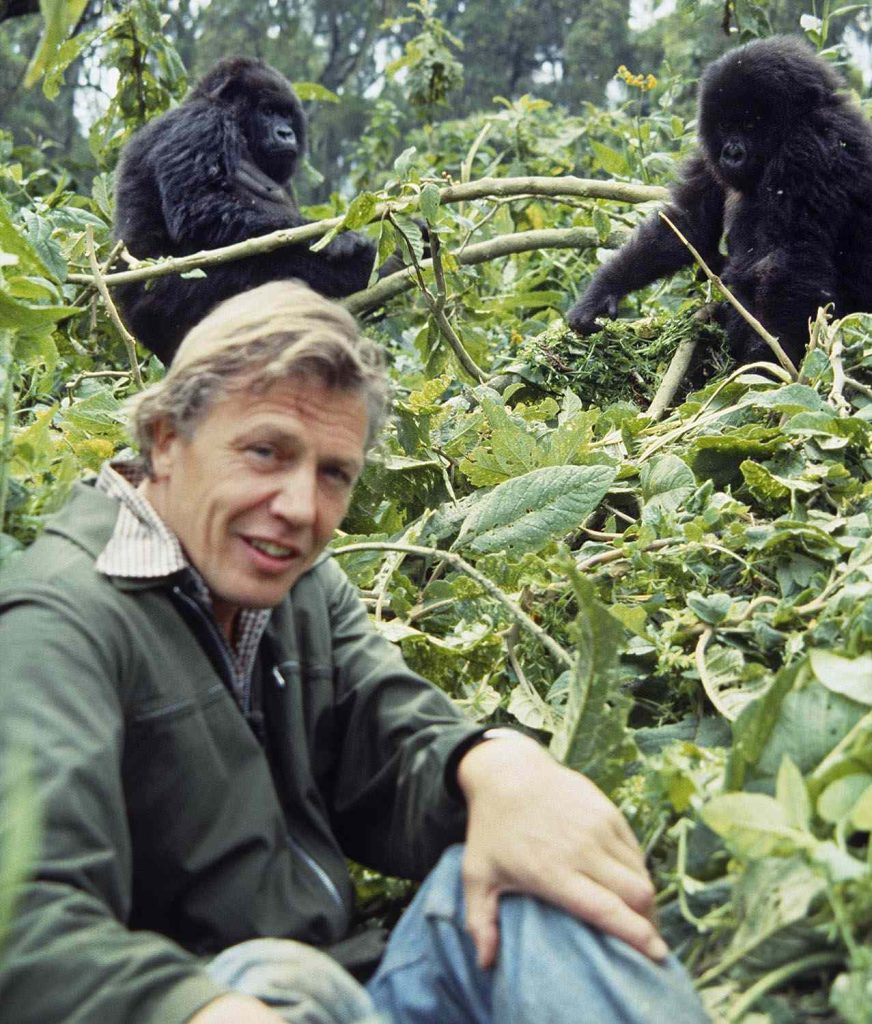
His most recent documentary, A Gorilla Story, takes us back to 1978 and that surprising moment in Rwanda when a baby gorilla, whom he named Pablo, climbed on top of Attenborough while they were filming and lay down him. The journey continues to the present day, with the descendants of that same gorilla, struggling to reproduce, for means of subsistence, and to compete for territory with the expansion of human agriculture.
That encounter with the other primates, and particularly with Pablo, seems to have marked Attenborough forever. “I will never forget him. Nor the impact he had on me. There’s more meaning and mutual understanding in exchanging a glance with a gorilla than with any other animal I know,” he reflects.
A Gorilla Story will surely not be the last documentary we will see from Attenborough. Scholey puts it this way: “David will always carry on working. For him time has always been precious. He is always interested in new things.”


