
Bothered by the high cost of her electricity bill in Florida and motivated to align with the growing number of Hispanics aiming to contribute to a less polluted planet, Ana María Méndez decided to transition to solar energy.
She initiated the process by requesting quotes from several solar panel installation companies, ultimately choosing one recommended by a co-worker of her husband, which instilled confidence in her decision.
“I decided because the electricity bill was always going up, and besides, one also participates in that important task of trying to pollute less,” she explained in an interview with Huella Zero.
Since last June, Méndez’s house in Miami has been equipped with solar panels, resulting in a substantial decrease in her electricity bill – from an average of $400 to just $23.
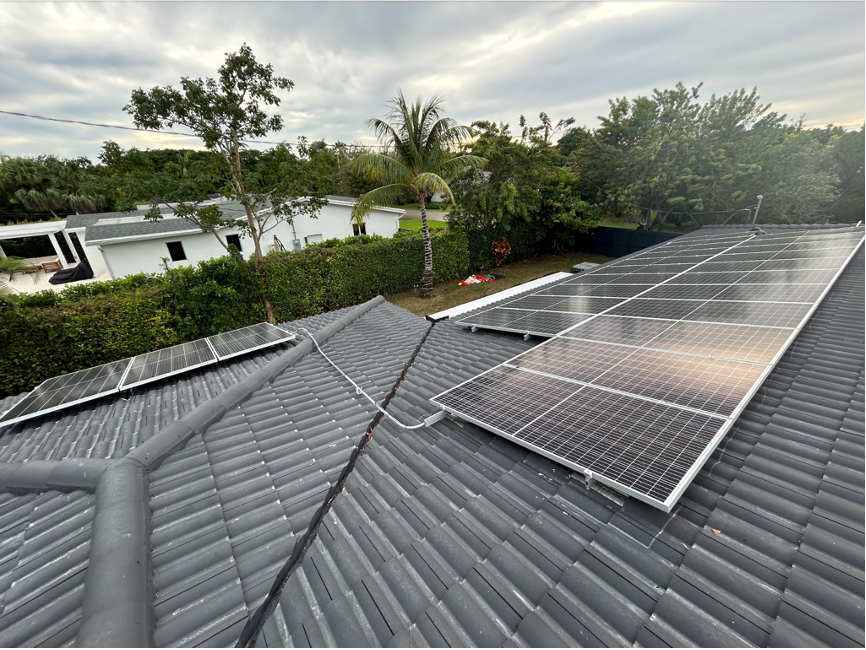
In addition to achieving significant savings, Méndez will also reap the benefits of the 30% tax deduction on purchase of the solar panels, courtesy of the Inflation Reduction Act (IRA) under President Joe Biden’s government.
Approved by the federal congress in August 2022, the IRA is designed to lower energy costs for families, generate thousands of jobs, and address other crucial goals for the U.S. economy and the environment.
The legislation allocates hundreds of billions of dollars for clean energy system projects in homes, businesses, and power plants.
The legal framework offers tax credits to consumers for various environmentally friendly initiatives, such as installing solar panels, acquiring electric vehicles, and purchasing efficient appliances.
Under the IRA, there is a notable promotion of solar energy systems, particularly through the expansion of the Federal Solar Investment Tax Credit (ITC). Residential homeowners installing solar panels between January 1, 2022, and the end of 2032 are eligible for a substantial 30% tax credit.
After 2032, the residential ITC is set to gradually phase out – reducing to 26% in 2033, 22% in 2034, and concluding in 2035, as outlined in an analysis by the University of Cincinnati.
The Internal Revenue Service (IRS) has outlined that consumers making energy improvements to their homes can avail tax credits for a portion of their qualified expenses.
“Improvements to your main home provide opportunities to claim a credit. If you own a second home and use it as a residence, you can also claim these credits. You cannot receive credits for property you rent to others,” explains the IRS on its website.
The amount of credit an individual can receive is a percentage of the total expenses incurred for improvements in the year of installation, according to the IRS:
- From 2022 to 2032: 30%, with no annual or lifetime maximum limit.
- 2033: 26%, with no annual or lifetime maximum limit.
- 2034: 22%, with no annual or lifetime maximum limit.
In Méndez’s case, the installation of solar panels amounted to approximately $48,500. Taking advantage of the 30% tax credit offered by the Inflation Reduction Act, she estimates that her investment would decrease to about $33,000.
This 30% tax credit offered by IRA is often emphasized by companies dedicated to installing solar energy systems as a key incentive for their potential customers.
“The same companies help you understand and offer you what is established in IRA. All the companies talk to you about it and lay it out on the table, precisely emphasizing that you will have that 30% savings,” explained Méndez.
Eduardo Hayek, a resident of Pittsburgh, Pennsylvania, also chose to adopt renewable energy with the dual purpose of contributing to the environment and realizing significant savings on his electricity bill.
“Our need to switch to clean energy was because we had already seen neighbors using solar panels, and here in summer and winter, when there are extreme temperatures, the electricity bill gets very high, above $200,” he told Huella Zero.
He pointed to the effects of climate change, including the formation of stronger hurricanes, as a contributing factor to his decision.
Like Méndez, Hayek consulted with several companies, carefully analyzed their offers, and ultimately selected the one he considered presented the best conditions.
However, during the company’s inspection of his 100-year-old house using a drone, it was discovered that the roof needed replacement.
The combined cost of replacing the roof and installing nine solar panels amounted to $28,000, a sum he obtained through financing.
But for Eduardo Hayek, the investment was worth it. His summer electricity bill now stands at $12, and he can conveniently monitor his house’s solar production through a dedicated app. The solar panels additionally come with a warranty of about 15 years.
Using the same app, he can also detect any anomalies in the roof and has the option to purchase an energy storage battery, activated if higher electricity consumption is required.
Furthermore, any excess energy generated by his solar panels is seamlessly fed back into the electricity grid.
However, it’s important to note that for some individuals, solar panels may not be a viable option, due to high financing terms that can strain family budgets.
Jocelyn López, a resident of Virginia, told Huella Zero that the installation of solar panels and the battery would cost her between $18,000 and $22,000.
It is important to note that this estimate does not include the roof, which would have a price tag of between $40,000 and $50,000. Despite the fact that her current roof is only six years old and, in her opinion, does not require replacement, the company that approached her insisted on the necessity of a new roof before proceeding with the installation of the solar panels.
She explained that the financing for the project spans 20 years. “The fine print (of the contract) has many financial nuances that were not convenient for us as a family.”
“We are a couple over 50 years old, our children are grown, and we don’t know how much longer we will be in the house to enjoy the benefits of this investment,” explained López.
Added Value to Homes
Keith Hernández, an executive at Bison Roofing & Solar, emphasized that individuals who purchase solar panels outright with cash typically start recovering their investment through electricity savings within a span of seven to nine years.
Alternatively, in cases where consumers opt for a loan to install the solar system, the savings derived from the solar panels can be utilized to offset the financing, according to his statement.
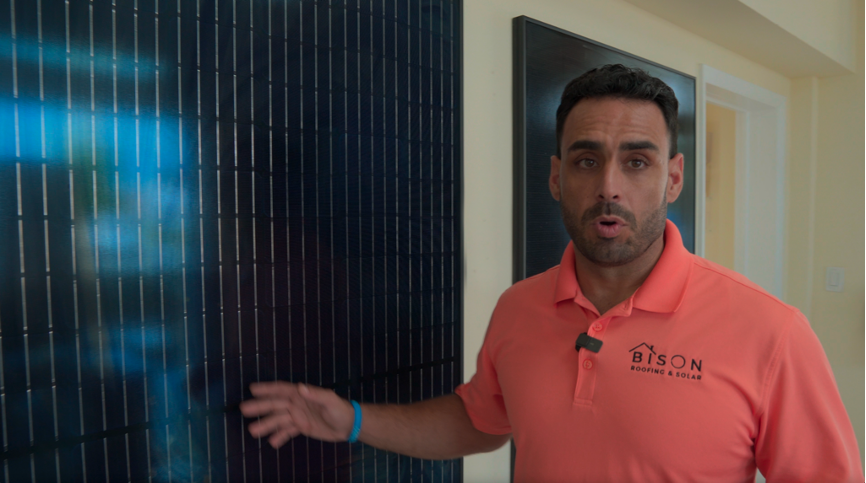
Hernández further explained that there is an additional advantage: loans typically come with fixed interest rates, providing a stable financial arrangement. In contrast, electricity rates have a tendency to increase over time, potentially surpassing the cost of interest on the loan in the long run.
“But the most important reason to install the panels is that you are taking the power to generate your own energy, which helps reduce costs and is also an investment because a house with solar panels, according to a recent article in Forbes, helps increase the property value up to 20 times what you save on electricity each year,” he told Huella Zero.
According to the National Renewable Energy Laboratory (NREL), the value of a home increases by $20 for every $1 reduction in annual utility bills.
Therefore, based on NREL data, a solar energy system that saves $200 per year could add $4,000 to the value of a house.
This additional benefit in home value is an aspect consumers perceive through the provisions of IRA, one that Hernández highlighted he also communicates to potential customers.
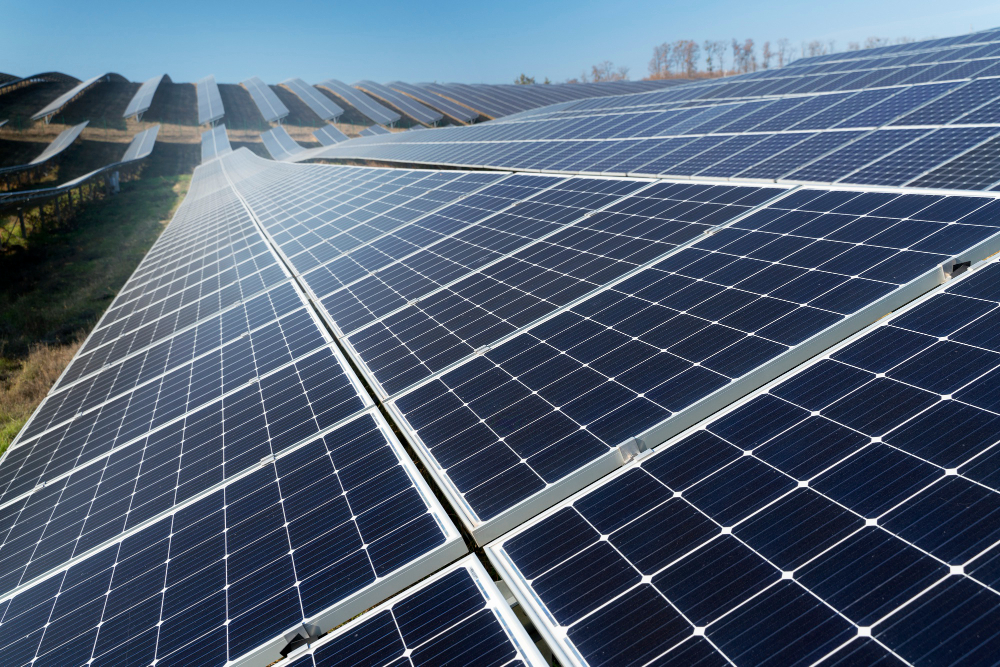
Hernández emphasized that the government, recognizing the significance of solar energy as the future, has provided incentives. He pointed out that those who are among the early adopters and install solar panels are the ones who truly benefit from these advantages.
“Right now, in California, they are asking to install panels in new constructions, and in the country, this will be something normal in the future. And when that happens, they probably won’t continue giving incentives. So, the best time is now to take advantage of the incentives,” he emphasized.