
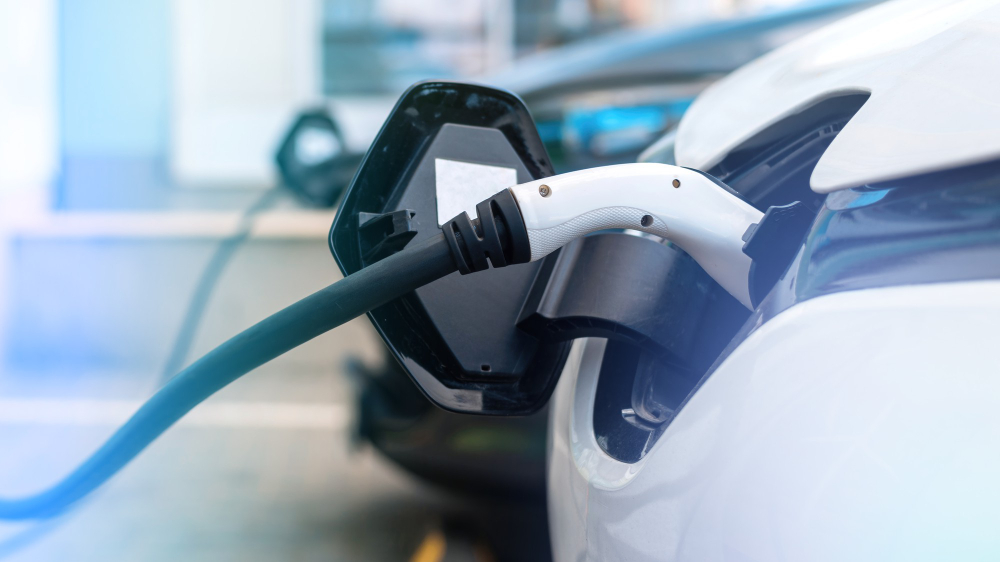
Andrés Miranda and his wife made a conscious choice to be part of the environmental change occurring in the United States by opting for electric cars. Their decision aimed at mitigating the emission of polluting gases that contribute to global warming.
The couple sought to be part of what they consider the “first push” towards transitioning from fossil fuels to clean energy, thereby actively contributing to reducing environmental pollution.

Miranda shared with Huella Zero that his wife purchased an electric vehicle with the specific goal of contributing to environmental sustainability. Additionally, she took advantage of the $7,500 tax credit established in the Inflation Reduction Act (IRA), signed into law by President Joe Biden on August 16, 2022. This legislation aims to address the climate crisis, stimulate the economy, and encourage the adoption of clean energy practices.
The legislative framework includes investments totaling $370 billion, directed towards lowering energy costs for families and small businesses, expediting private investment in clean energy solutions, and creating well-paying jobs.
The law provides tax credits to consumers for installing solar panels, purchasing electric vehicles, and for acquiring efficient appliances.
Miranda explained that a dealership contacted them, informing them of the opportunity to apply for the tax credit. His wife then purchased a vehicle with an initial cost of approximately $52,000. Utilizing the tax benefit, the price was reduced by $4,500, resulting in a total payment of $47,500.
While Miranda leased his vehicle and, consequently, did not qualify for that specific tax credit according to the law, he maintains a positive view of electric vehicles, recognizing the associated benefits.
“I didn’t have a car; I did everything on a bike. When I needed to buy a car, the prices were extremely high, and in terms of price, quality, and the car itself, it was the best option for me in the market,” he said, referring to electric cars.

Both Andrés Miranda and his wife charge their electric vehicle batteries for free using the parking lot outlets at their workplace. However, when they need to charge at other locations, they typically pay around $15 to $20, with the cost varying based on the level of depletion in the car’s battery.
His electric vehicle has a range of 250 to 260 miles, while his wife’s vehicle boasts a range of 280 miles. The cars are primarily used for their work commute, and they have been used for out-of-town trips only on a few occasions.
Miranda also has recommendations for individuals considering purchasing this type of car.
“Yes, I believe that people looking to buy an electric car need to think about it, understand a bit about how it works. For example, we were prepared; we knew we could charge it at our jobs, that we could charge them near home. You have to study all the details,” he said.
Maria Lucía Benedetti, Executive Vice President of South Dade Group, concurs with this sentiment and recommends that individuals thoroughly educate themselves before making a decision to purchase an electric vehicle.
“Our suggestion is that people educate themselves first. What usually happens is that people go to the dealership without knowing. The first thing they have to understand is their needs, why they want it, and what its use will be,” she told Huella Zero.
Benedetti mentioned that her company has witnessed a rise in the sales of electric cars. They have noted that individuals visiting their dealership with the intention to make a purchase often have a specific goal in mind—to contribute to environmental conservation.
“They want an electric car for that purpose; they come to the dealership with knowledge of what they want and have studied the subject,” she explained.
Regarding Latinos, Benedetti noted, “they are more emotional; they come to buy a car that may or may not be electric.” She highlighted that the decision to acquire such a vehicle may stem from their attractiveness and the enjoyment they offer, rather than solely driven by the desire to reduce the carbon footprint.
“But as we are all in this environmental movement, it will lead us all to look for alternatives that can collaborate with the environment,” she commented.
At South Dade Kia, Benedetti’s dealership, they also provide hybrid and plug-in electric cars that have a shorter electric range but can seamlessly switch to fuel when needed.
The price range for electric cars at her dealership spans from $38,000 to $72,000. Benedetti further explained that the financing automatically deducts the applicable tax credit from the vehicle’s price.
Encouraging Environmental Improvement
Benedetti believes that the Inflation Reduction Act (IRA) aims to promote environmental improvement through the purchase of electric cars. However, she noted that initially, the law had some regulations that made it quite complex to obtain tax benefits, such as the requirement for cars to be fully assembled in the country.
It was later modified, expanding the range of prices and battery size, allowing certain vehicles to qualify for the benefit directly.
She remarked, “the tax credit is not so easy to use; it is still quite complicated due to, let’s say, the fine print of the law.” Benedetti added that ongoing adjustment]s are still being made to the law.

One positive aspect of the law is that it has compelled automakers to make changes in the manufacturing of their vehicles. Almost all of them are striving to enhance their electric cars, with a particular focus on improvements to the battery, which “had become complicated because we depended entirely on China.”
President Biden announced the American Battery Materials Initiative in 2022 to secure a reliable and sustainable supply of critical minerals. It is used for electric and power vehicles.
The directive mentioned that Toyota is investing $3.8 billion in its North Carolina plant to manufacture a much more efficient and environmentally friendly battery.
“Toyota also has a hydrogen car that is much greener,” she emphasized.
As for whether she sees the automotive market becoming more involved in mitigating climate change with the use of clean energy cars, Benedetti said it “seems very interesting, but I think we haven’t gotten there yet.”
Benedetti argued that one reason the automotive market hasn’t fully embraced clean energy cars for everyone in the United States is the lack of infrastructure. “There is not enough electricity, and the battery does not benefit the environment enough,” she added.
“I feel like we haven’t gotten there yet, but we’re trying. Assemblers and designers are looking there with more awareness and seeking to be more efficient. We are in the process, and the process is changing. That will bring us the benefit we are looking for in reducing the carbon footprint. We are walking towards that,” she affirmed.
Environmental and Economic Benefits
Electric vehicles offer significant environmental benefits by contributing less to air pollution and climate change compared to gasoline-powered cars.
This advantage remains crucial even when considering that a substantial portion of the electrical grid relies on fossil fuels, as noted by the Environmental Defense Fund.
As the electrical grid transitions to more sustainable sources and renewable energy becomes more prevalent, the positive impact of electric vehicles on the environment is expected to increase.
In contrast, gasoline vehicles continue to emit pollutants during their operation.
According to the Environmental Defense Fund, the advantages of electric vehicles remain noteworthy, with a medium-sized electric car emitting between 60% and 68% fewer greenhouse gasses over its lifespan compared to a gasoline car.
The Alternative Fuels Data Center (AFDC) of the U.S. Department of Energy highlights that electric vehicles can “drastically reduce” fuel costs due to the high efficiency of electric propulsion components.
The explanation provided is that fully electric vehicles and plug-in hybrid electric vehicles (PHEVs), relying entirely or partially on electric power, have their fuel economy measured differently than conventional vehicles.
“Miles per gallon of gasoline equivalent (MPGe) and kilowatt-hours (kWh) per 100 miles are common metrics. Depending on how they are driven, today’s fully electric light vehicles (or PHEVs in electric mode) can exceed 130 MPGe and travel 100 miles consuming only between 25 and 40 kWh,” the AFDC on its website.
Hybrid Electric Vehicles (HEVs) typically achieve better fuel economy and have lower fuel costs compared to similar conventional vehicles, as stated by the AFDC.
People can compare fuel savings at FuelEconomy.gov.
The AFDC notes that the fuel economy of medium and heavy-duty fully electric and PHEV vehicles is largely dependent on the load being transported and the duty cycle.
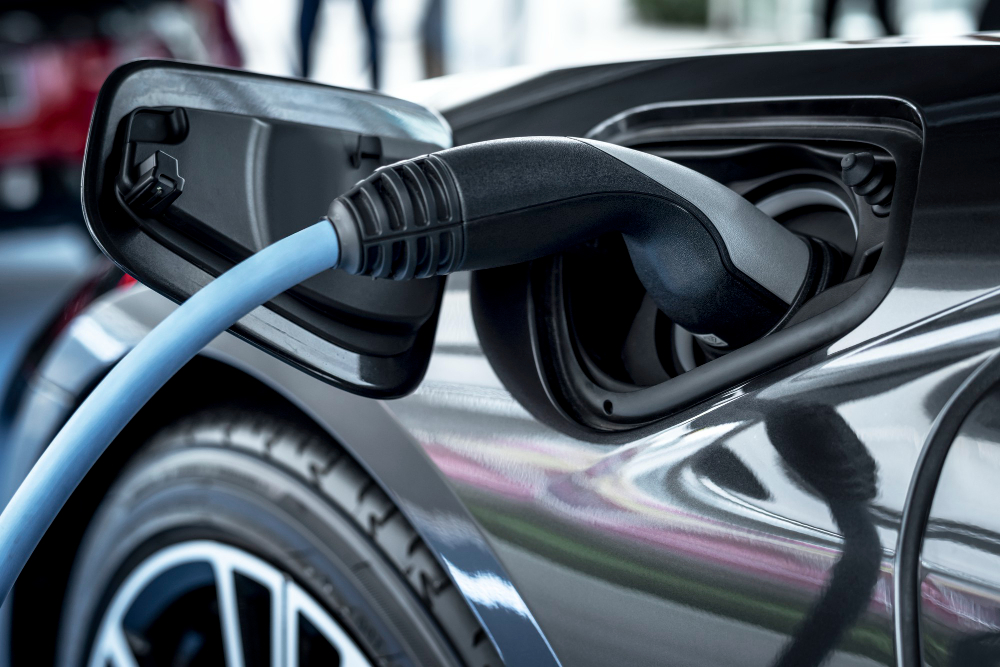
“But in the right applications, fully electric vehicles maintain a strong cost advantage over their conventional counterparts,” a representative of the organization stated.
Regarding the improvement in air quality and the reduction of carbon emissions, a study from study from Northwestern University investigated the differences in air pollution generated by battery-powered electric vehicles versus internal combustion engines.
“Researchers found that even when their electricity is generated from combustion sources, electric vehicles have a net positive impact on air quality and climate change,” noted the academic institution.
Daniel Horton, the lead author of the study and assistant professor of Earth and Planetary Sciences in the Weinberg College of Arts and Sciences at Northwestern, stated that climate change is happening, and one technological approach to address it is by electrifying the transportation system.
“We found that the adoption of electric vehicles reduces net carbon emissions and has the additional benefit of reducing air pollutants, thus improving public health,” emphasized the scholar.
The transportation sector represents about 30% of the total energy needs in the United States and contributes to 70% of U.S. oil consumption, according to data from the Department of Transportation.
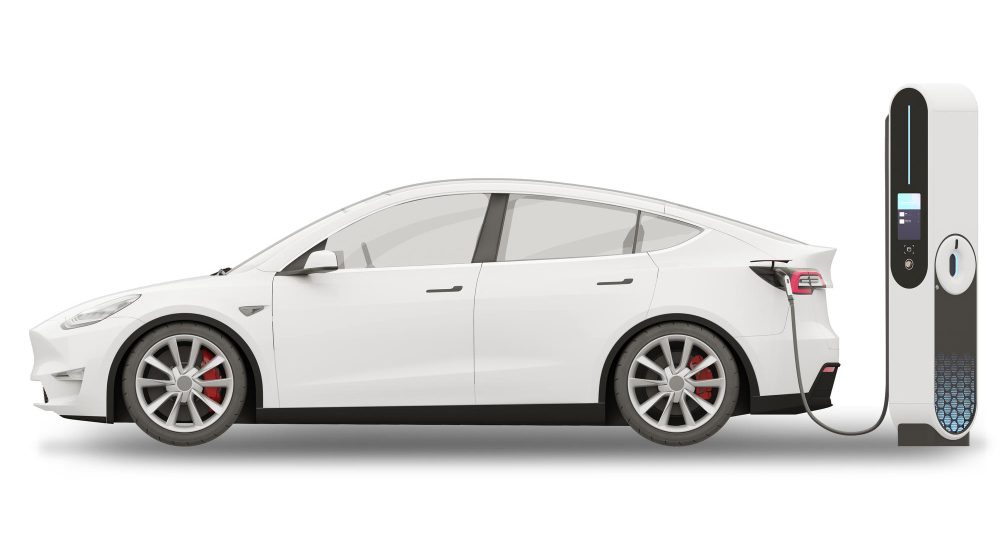
The transportation sector is additionally the largest source of greenhouse gas emissions in the United States, comprising 27% of all emissions in 2020, according to data from the White House.
Additionally, transportation is a significant contributor to nitrogen oxides and particles that form smog, which can lead to potential health issues such as asthma attacks and other respiratory problems.
Federal Rebates
The IRA Act introduced various changes to tax credits for qualified plug-in electric motor vehicles, including the addition of fuel cell vehicles to the tax credit, as reported by the Internal Revenue Service (IRS).
Beginning on January 1, 2023, eligible vehicles may qualify for a tax credit of up to $7,500. However, the amount of the credit is contingent on when the new eligible clean vehicle is placed in service and whether it meets specific requirements for a total or partial credit.
You can qualify for a credit of that amount if you purchase a new and eligible plug-in electric or fuel cell vehicle (FCV).
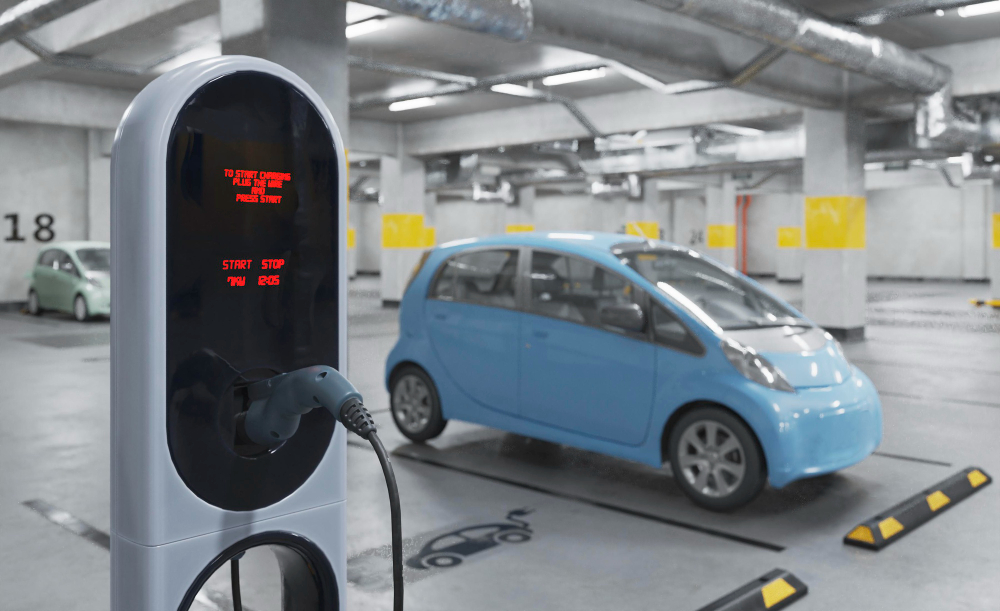
To qualify, the vehicle must be bought for personal use, not for resale, and primarily use it in the United States.The modified adjusted gross income (AGI) cannot exceed the following:
- $300,000 for married couples filing a joint return.
- $225,000 for heads of households.
- $150,000 for all other filers.
“You can use your modified AGI from the year you receive the vehicle or the previous year, whichever is less. If your modified AGI is below the threshold in 1 of the 2 years, you can claim the credit,” the IRS stated.
The IRS warned that the credit is non-refundable, meaning you cannot recover more in credit than you owe in taxes. Any excess credit cannot be applied to future tax years between 2023 and 2032.
The amount of the credit depends on when the vehicle was placed in service (delivered), regardless of the purchase date.
For vehicles placed in service from January 1 to April 17, 2023, the credit is calculated as follows: $2,500 base amount; plus $417 for a vehicle with at least 7 kilowatt-hours of battery capacity; plus $417 for each kilowatt-hour of battery capacity beyond 5 kilowatt-hours.
In general, the minimum credit will be $3,751 ($2,500 + 3 times $417), the credit amount for a vehicle with a minimum battery capacity of 7 kilowatt-hours.
- The vehicle cannot be acquired for resale.
- It must be manufactured by a qualified manufacturer.
- It must meet the definition of a motor vehicle under Title II of the Clean Air Act: primarily manufactured for use on streets, roads, and public highways. It must also have at least four wheels.
- It must have a gross vehicle weight rating of less than 14,000 pounds.
- It must be largely propelled by an electric motor with a battery capacity of 7 kilowatt-hours or more and must be capable of recharging from an external source of electricity.
- It must have a final assembly in North America.
Furthermore, for a taxpayer to claim the credit, the seller of a new clean vehicle must provide a report containing data on the taxpayer and the vehicle.
For vehicles placed in service on April 18, 2023, and after:
Vehicles must meet the same criteria listed above, plus comply with new critical requirements for mineral and battery components to qualify for a credit of up to:
- $3,750 if the vehicle meets the critical minerals requirement only.
- $3,750 if the vehicle meets the battery components requirement only.
- $7,500 if the vehicle meets both.
A vehicle that meets none of the requirements will not be eligible for a credit.
People can get information on vehicles that qualify for the new clean vehicle credit at FuelEconomy.gov.
This list comprises eligible clean vehicles, including fuel cell vehicles, that qualified manufacturers have indicated to the IRS meet the requirements for claiming the credit.
The list additionally will be updated as further vehicle eligibility requirements are met.
The U.S. Environmental Protection Agency (EPA) indicated that final confirmation of vehicle eligibility must be done at the time of purchase.
The seller must provide the buyer with a report on the vehicle’s eligibility at the time of sale.
Regarding price limitations for eligible new clean vehicles for the credit, the IRS has specified that the manufacturer’s suggested retail price (MSRP) cannot exceed certain amounts for such vehicles:
- Vans – $80,000
- Sport Utility Vehicles: $80,000
- Trucks: $80,000
- Others – $55,000
“If the MSRP exceeds the limitation for that specific type of vehicle, that vehicle is not eligible for the new clean vehicle credit,” the IRS warned.
Also of interest:
Huella Zero is a program of Sachamama, a non-profit organization working to promote a clean energy economy for all, as well as sustainable attitudes, behaviors, and lifestyles.